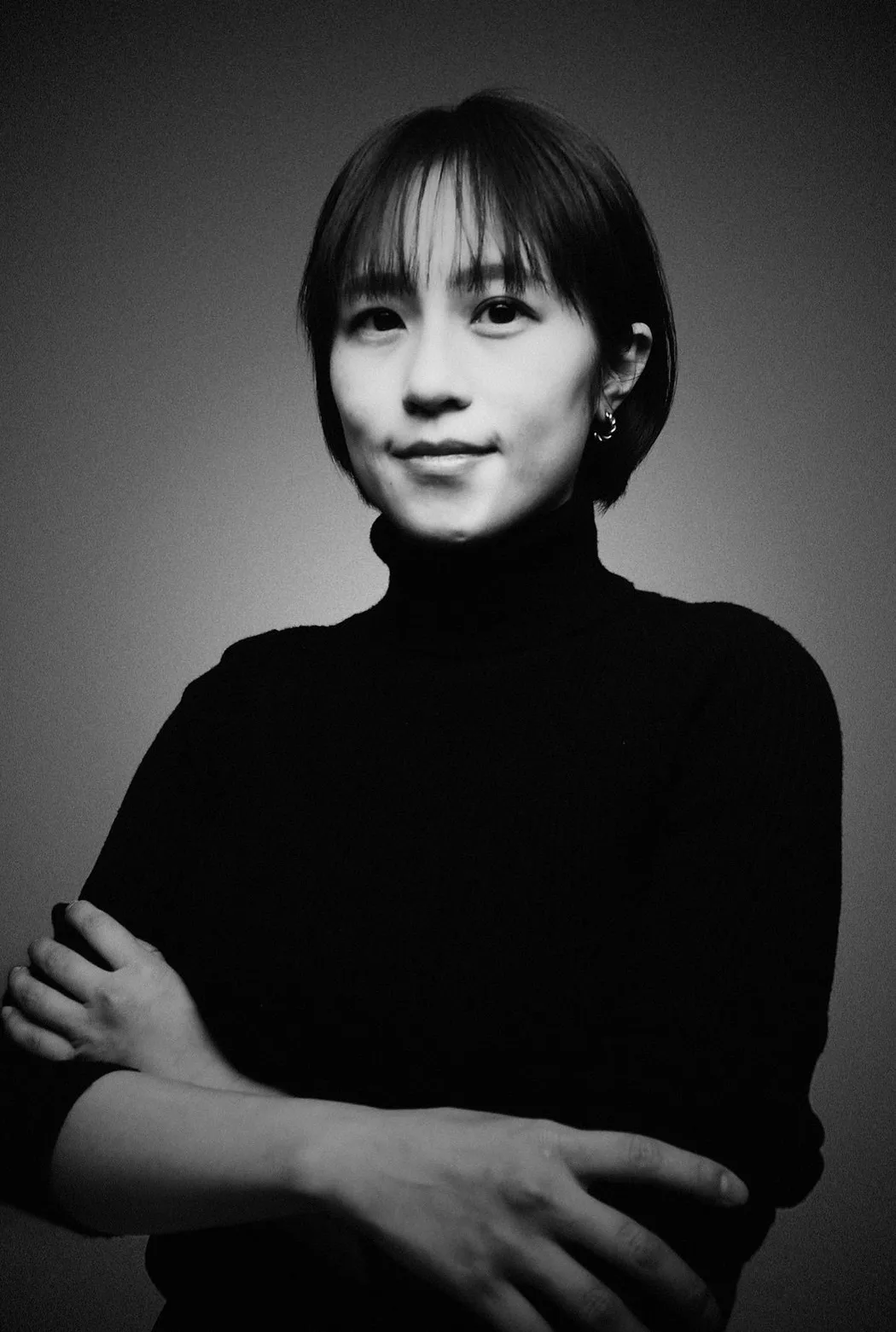


張 堉泉
YU CHUAN CHANG
Painter, oil painting・22 yrs
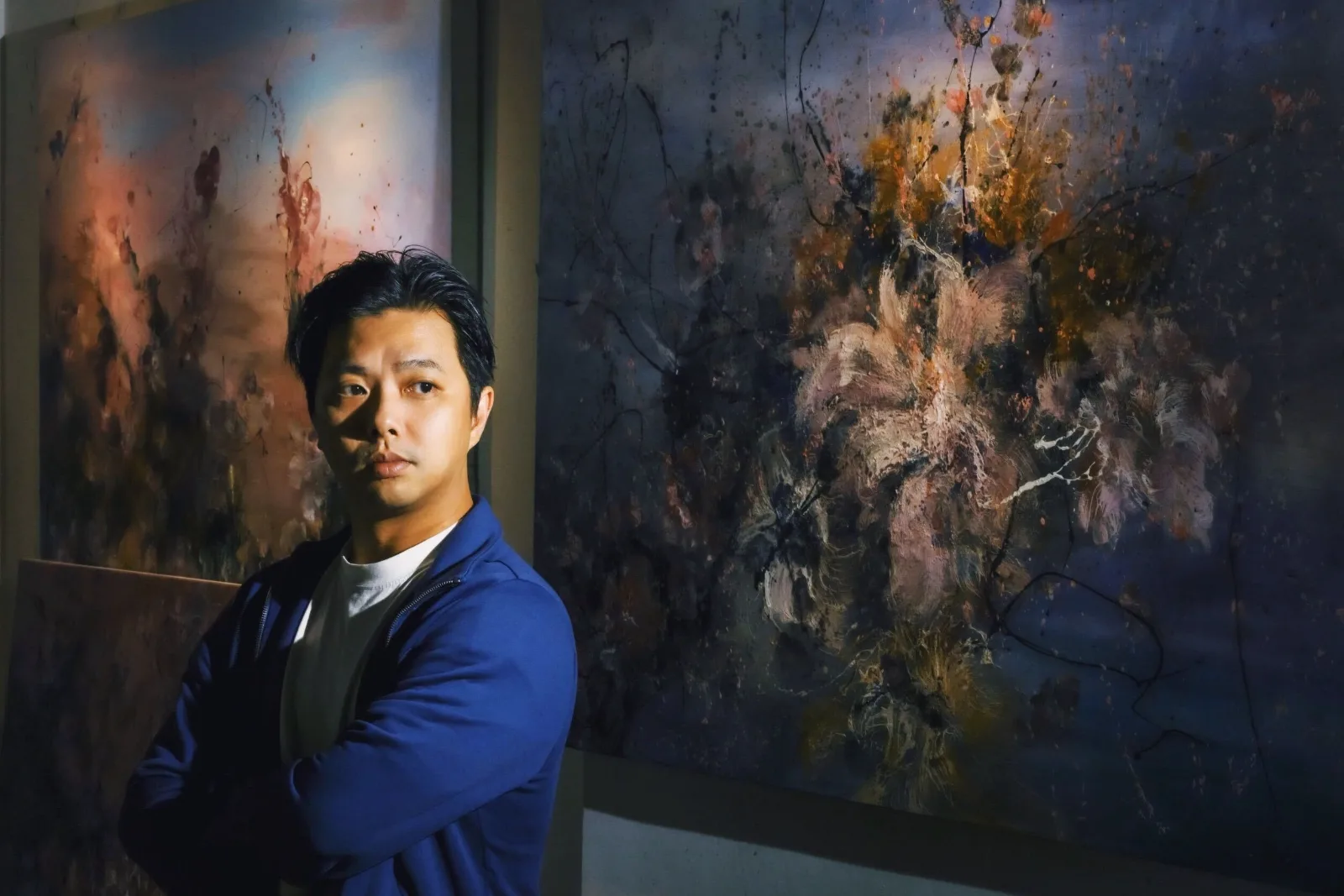
Taiwanese painter Yu Chuan, who moved his base of operations to Japan in 2026, has presented his new work, "Poppy," at the Jimbocho Street Art event. Drawing inspiration from the literature of Natsume Soseki and the book designs of Goyo Hashiguchi, he incorporates the traditional Japanese artistic technique of "honkadori" (allusion to earlier works), intertwining the history and culture of Jimbocho with his own artistic expression. Through this work where literature and contemporary art intersect, he explores the possibility of serendipitous encounters that occur in everyday life and new artistic experiences.
Meishi+
Interviewer
YU CHUAN CHANG
Painter, oil painting
Jinbocho and myself
Meishi+
Could you tell us about the circumstances that led to this exhibition and what you initially envisioned?
YU CHUAN CHANG
I was born and raised in Taiwan, and after graduating from university, I continued my artistic activities in different cultures and environments, such as Shanghai and Italy. I feel that these experiences have greatly influenced my expression. I also have a long-standing connection to Japan through my family and relatives, and I have always wanted to set up a studio in Japan, so I started working from Japan in 2026. Jimbocho, the venue for this exhibition, is a town where literature and publishing culture are deeply rooted. Furthermore, the Shinsekai Building, currently owned by Shogakukan, has a history of having once housed a long-established Chinese restaurant, and I feel a connection to my own roots and experiences. I wanted to create a work that could only be born in this place, drawing on the history and culture of this land and my own journey.
exhibition space
Meishi+
What kind of experiences and ways of spending time do you hope visitors will have?
YU CHUAN CHANG
For this exhibition, I hope that visitors will enjoy the artwork along with the unique atmosphere and flow of time of the location. The glass-enclosed showcase on the first floor of the Shinsekai Building faces the main street of Jimbocho, and the way the light enters and the atmosphere of the city change throughout the day—morning, noon, evening, and night. I believe that one of the charms of this exhibition is that the same artwork will show different expressions depending on the time of day and angle from which it is viewed. In typical museums and galleries, artworks are often viewed in a stable lighting environment, but this time I have deliberately incorporated natural light and the changing environment of the city to create a variety of expressions and impressions from a single artwork. This is a new challenge for me as well, and it is an attempt to explore new possibilities of expression and to further grow as an artist. Until now, I have mainly presented my work in galleries and at art fairs both domestically and internationally, but this time I am looking forward to people who do not usually have many opportunities to encounter contemporary art naturally encountering the artwork in their daily lives. I would be happy if people could stop by as they pass by or casually glance at the artwork and enjoy it freely according to their own sensibilities.
Behind the scenes of production
Meishi+
Please tell us about any doubts or adjustments you had while working on the project.
YU CHUAN CHANG
Last year, when I held an exhibition at the Kyoto tea house "POUYUENJI," I received a response that exceeded my initial expectations, and I made new discoveries about the relationship between artwork and exhibition space. I wanted to utilize that experience for this exhibition in Jimbocho, so I worked with curator Shungo Kashiwagi, who I also worked with on the Kyoto exhibition, to develop the concept and ideas for the artwork. Jimbocho is known as one of the world's leading districts for used bookstores, and it is a town where literature and publishing culture are deeply rooted. Therefore, I chose Natsume Soseki's novel "Gubijinsō" (The Poppy) as the subject. Gubijinsō is another name for the corn poppy, and its name is said to originate from the story of Xiang Yu, an ancient Chinese general, and the woman he loved, "Yu Jiren." The connection between the kanji character "Yu" and Chinese history and culture was also interesting to me, having grown up in the Chinese-speaking world. While cherishing respect for Japanese literature and art, I aimed to combine the story of flowers, which originates from Chinese culture, with my own expression, and elevate it into a new, contemporary "Poppy." To achieve this, I exchanged ideas with Ms. Kashiwagi many times, and while being mindful of the harmony with the history and culture of the Jimbocho area, we repeatedly refined every detail of the concept and expression.
Honkadori
Meishi+
What were some of the feelings you wanted to retain until the very end of your new work, and what parts did you try to avoid over-explaining?
YU CHUAN CHANG
For this work, I was intrigued by the anecdote that Natsume Soseki encountered this flower and adopted it as the title of his novel. I focused on the moment of realization and feeling Soseki experienced when he saw the poppy (Gubijinsou) and decided on the title. I also drew inspiration from the cover design that the publisher, Shun'yodo, commissioned from the renowned book designer Hashiguchi Goyo for the first edition published in the Meiji era. For this work, I incorporated the expressive technique of "honkadori," which originates from Japanese waka poetry and is also applied in contemporary art. By overlapping the worldview of the literary work and the beauty of the book's design at the time with my own expression, I wanted to create a new, contemporary two-dimensional work of art called "Gubijinsou." Unlike museums and galleries, this exhibition places the artwork in the everyday environment of the city. Some people will take their time to appreciate it carefully, while others may just happen to notice it on their way to their next destination and only glance at it for a few seconds. That's why I focused on creating an expression and exhibition method that would allow each person to take away their own impression and feelings, even without knowing the background or concept of the work in detail. I hope this work will be something that viewers can enjoy freely according to their own sensibilities.
Everyday life and expansion
Meishi+
Who would you like to share this work and experience with in the future?
YU CHUAN CHANG
For this "Jimbocho Street Art" event, I'm looking forward to seeing what kind of reactions and encounters will arise in this different environment through the presentation of my work. During the event, the "Kanda Used Book Festival," one of the world's largest used book events, will also be held, attracting many visitors to Jimbocho. I'm very interested to see what people will think, not only those who are already familiar with art, but also those who have had little opportunity to experience contemporary art before. Furthermore, through the preparation for this exhibition, I've had new interactions with people from companies and those working in different fields. These encounters have been a very fresh and valuable experience for me, as I've only recently started my artistic career in Japan. This project has also sparked my interest in Japanese literature and book design. In the future, I would like to deepen my interactions with Japanese novelists and other people active in the world of literature and publishing, and try new fields such as having my work incorporated into book design and cover art. I look forward to the various encounters that will arise through this exhibition, which will broaden the scope of my activities in Japan and bring new possibilities to my own expression.
張 堉泉
YU CHUAN CHANG
Painter, oil painting・22 yrs
Share what you care about as an article.